The Habit Loop, Explained: Cue, Routine, Reward and Why Willpower Isn't the Answer
Created by John Assaraf with AI-assisted research and drafting. Reviewed and approved by John Assaraf.
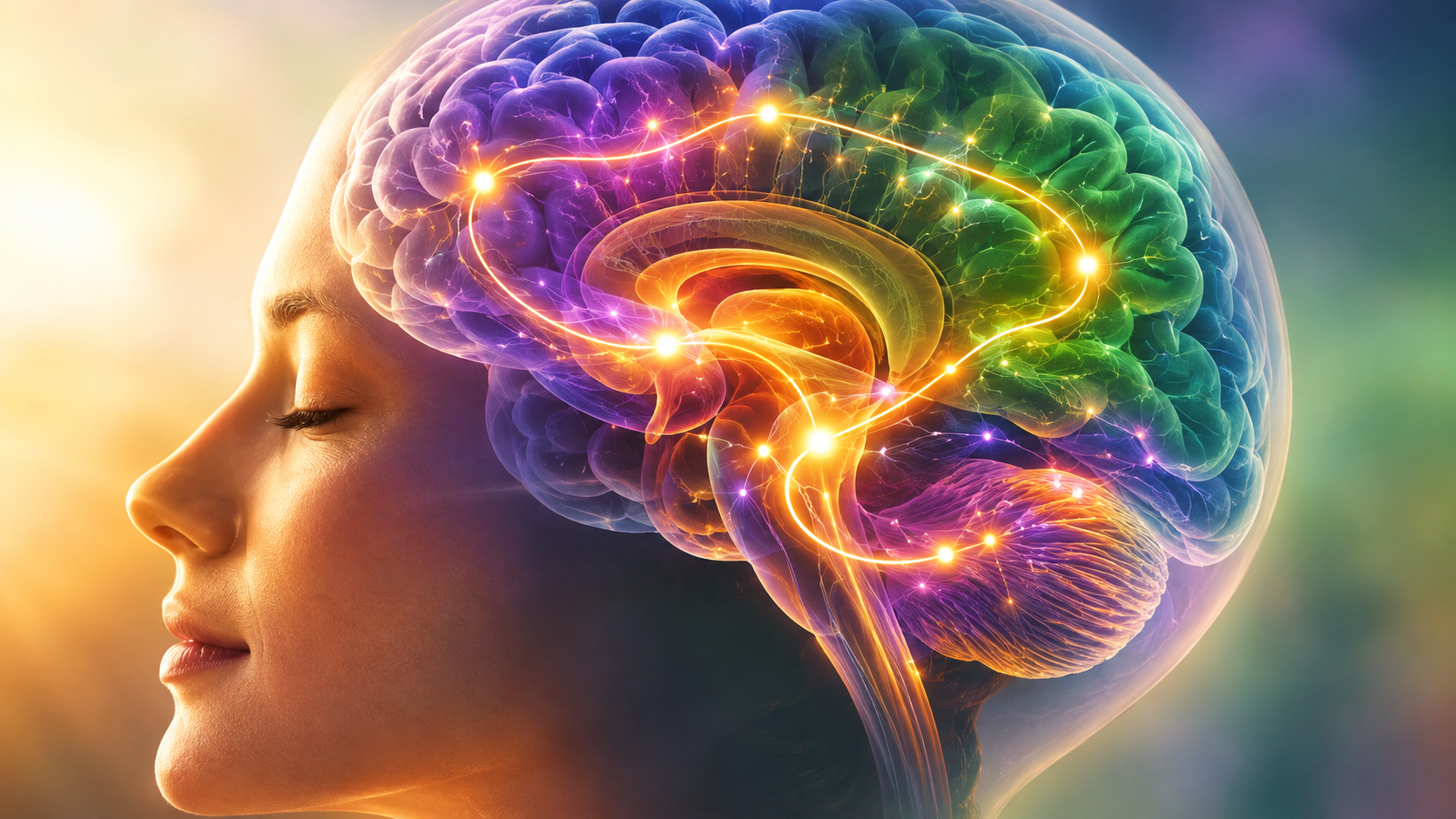
You have probably tried to change a habit before. Maybe more than once.
You told yourself you would stop reaching for your phone first thing in the morning. Or that you would start exercising before work. Or that you would finally stop procrastinating on the project that matters most.
And for a few days, maybe a few weeks, it worked. Then it stopped working.
The old pattern came back, and the new one quietly disappeared.
Most people blame themselves when this happens. They assume they lack discipline, motivation, or commitment.
But neuroscience tells a very different story.
The reason habits are so difficult to change has almost nothing to do with how much you want it. It has everything to do with how your brain is wired, and specifically with a circuit that runs beneath your conscious awareness.
It's called the habit loop.
And understanding how it works changes everything about how you approach behavior change.
What the Habit Loop Actually Is
The habit loop is a three-part neurological process that your brain uses to automate repeated behavior.
It was first described in detail by researchers at MIT, most notably neuroscientist Ann Graybiel, who mapped how the brain encodes habits at the cellular level.
The three components are simple:
The Cue: This is the trigger. It can be a time of day, an emotional state, a location, another person, or a preceding action. The cue tells the brain which stored routine to activate.
The Routine: This is the behavior itself. It's the sequence of actions your brain has learned to execute once the cue fires.
The Reward: This is the payoff. It can be neurochemical, like a release of dopamine. It can be emotional, like relief from stress or a momentary sense of control. The reward is what tells the brain this loop is worth keeping.
What makes the habit loop powerful is not any single part. It's the fact that once the loop is established, it runs automatically.
The entire sequence gets compressed into a single neurological "chunk" that the basal ganglia, a deep brain structure responsible for pattern recognition and automatic behavior, can execute without involving your conscious mind.
This is useful for a lot of things.
It's why you can drive a familiar route, brush your teeth, or type on a keyboard without thinking about each individual movement. Your brain has automated those behaviors to free up mental resources for more demanding tasks.
But it's also why changing a habit feels so frustratingly difficult.
Why Willpower Is Not the Answer
Here is the part that most advice gets wrong.
When you try to change a habit through sheer willpower, you are asking the prefrontal cortex to override the basal ganglia. And that is a fight the prefrontal cortex will almost always lose.
During the early stages of learning a new behavior, the prefrontal cortex, the region responsible for conscious decision-making, planning, and self-regulation, is heavily involved.
It takes real cognitive effort to choose the new action instead of the automatic one. This is why new habits feel so exhausting at first.
But the prefrontal cortex is a limited resource.
It tires. It gets depleted by stress, poor sleep, decision fatigue, and emotional strain. The more demands placed on it during the day, the less bandwidth it has to keep overriding the automatic loop running in the basal ganglia.
This is not a metaphor. Research published in a Proceedings of the National Academy of Sciences (PNAS) article(¹), confirmed that once a habit is consolidated in the basal ganglia, the prefrontal cortex disengages from the routine entirely. The behavior fires on its own. By the time you are consciously aware you are doing it, the loop has already started.
Willpower, then, is not a long-term strategy. It is a short-term override that works until the thinking brain gets tired. And in a world that exhausts the thinking brain daily, that does not take very long.
Your habits are shaped by neural patterns you may not even be aware of. This free assessment reveals which mental and emotional circuits are driving your automatic behaviors so you know exactly where to focus.
Old Habits Are Never Truly Erased
This is one of the most important findings in habit neuroscience, and it's the one that gives people the most trouble.
What the Research Shows
Ann Graybiel's lab at MIT ran experiments that tracked neural activity in the basal ganglia across the full lifecycle of a habit: formation, consolidation, extinction, and reemergence(²). When the reward was removed and the behavior stopped, the basal ganglia firing pattern disappeared. The habit appeared to be gone.
But it was not gone. It was suppressed.
When the original context returned, or when stress entered the picture, the old firing pattern snapped back instantly. The habit had not been erased from the brain. It had been held in check by a competing signal from the infralimbic cortex, a small region of the prefrontal cortex that acts as the brain's habit brake. When that brake weakened, the old loop resurfaced.
This explains why people relapse into old patterns after periods of stress. It explains why going back to a childhood home can reactivate behaviors you thought you outgrew. And it explains why the goal is never to erase a habit. The goal is to build a stronger one in its place.
How to Actually Rewire the Loop

If habits cannot be erased, and willpower is not a sustainable solution, the question becomes: what does work?
The answer, according to the research, is to keep the cue and the reward, and change the routine.
This is the core principle of habit replacement. The brain has already wired the cue to a reward. That connection is strong and will persist. But the routine, the middle of the loop, can be substituted with a new behavior that delivers a similar neurological payoff.
For example, if the cue is stress and the reward is temporary relief, the routine does not have to be reaching for your phone or snacking. It can be a deliberate, six-to-twelve-minute innercise® session that gives the brain the same sense of relief through focused breathing and mental training, but without the cost of the old pattern.
The key is repetition. New research from Johns Hopkins University, published in Nature Communications in 2026, found that the transition from deliberate behavior to automatic habit happens faster than scientists previously believed. The neural pathways do not need months to consolidate. With consistent repetition in a consistent context, the basal ganglia begin to take over the new routine much sooner than the old "21 days" myth suggested.
But "faster" still requires consistency. The new behavior needs to be repeated in the same context, linked to the same cue, and followed by a genuine reward. Miss any of those three and the loop does not solidify.
This is what neuroscientists call self-directed neuroplasticity: the deliberate use of repeated, focused practice to rewire the brain's automatic circuits. It is not magic. It is the mechanism your brain already uses to form habits in the first place. The only difference is that this time, you are choosing which loop to build.
The Habit You Build Is the Life You Live
Research estimates that up to 43 percent of daily actions are habitual. Nearly half of what you do on any given day is not the result of a conscious decision. It is the result of a loop your brain automated at some point in the past.
That is an extraordinary amount of your life running on autopilot.
When those loops serve you, they are one of the most efficient systems your brain has. When they do not, they quietly shape your health, your productivity, your relationships, and your sense of what is possible, without you ever making a deliberate choice about any of it.
The habit loop is not the enemy. It's a tool. The question is whether you are using it intentionally, or whether it is using you.
The science is clear. You cannot think your way out of a habit. But you can train your way into a better one. And the place to start is not with more willpower. It's with understanding what the cue is, what the reward is, and what new routine you want your brain to automate in place of the old one.
That's how real, lasting change works. Not through force. Through design.
- Replace the automatic patterns running in the background
- Build unshakeable focus, confidence, and follow-through
- Daily innercise sessions, just 6 to 12 minutes
Sources and References
- Grillner, S. (2025). How circuits for habits are formed within the basal ganglia. Proceedings of the National Academy of Sciences, 122(13), e2423068122. Published online March 13, 2025.
- Barnes, T. D., Kubota, Y., Hu, D., Jin, D. Z., and Graybiel, A. M. (2005). Activity of striatal neurons continues to evolve through a succession of critical stages during the development of a motor habit. The Journal of Neuroscience, 25(4), 2005-2015.